DOCUMENTARY PHOTOGRAPHY
The longer I photograph weddings and people, the less convinced I become that photographs are made with cameras.That sounds ridiculous, I know. But let me explain.
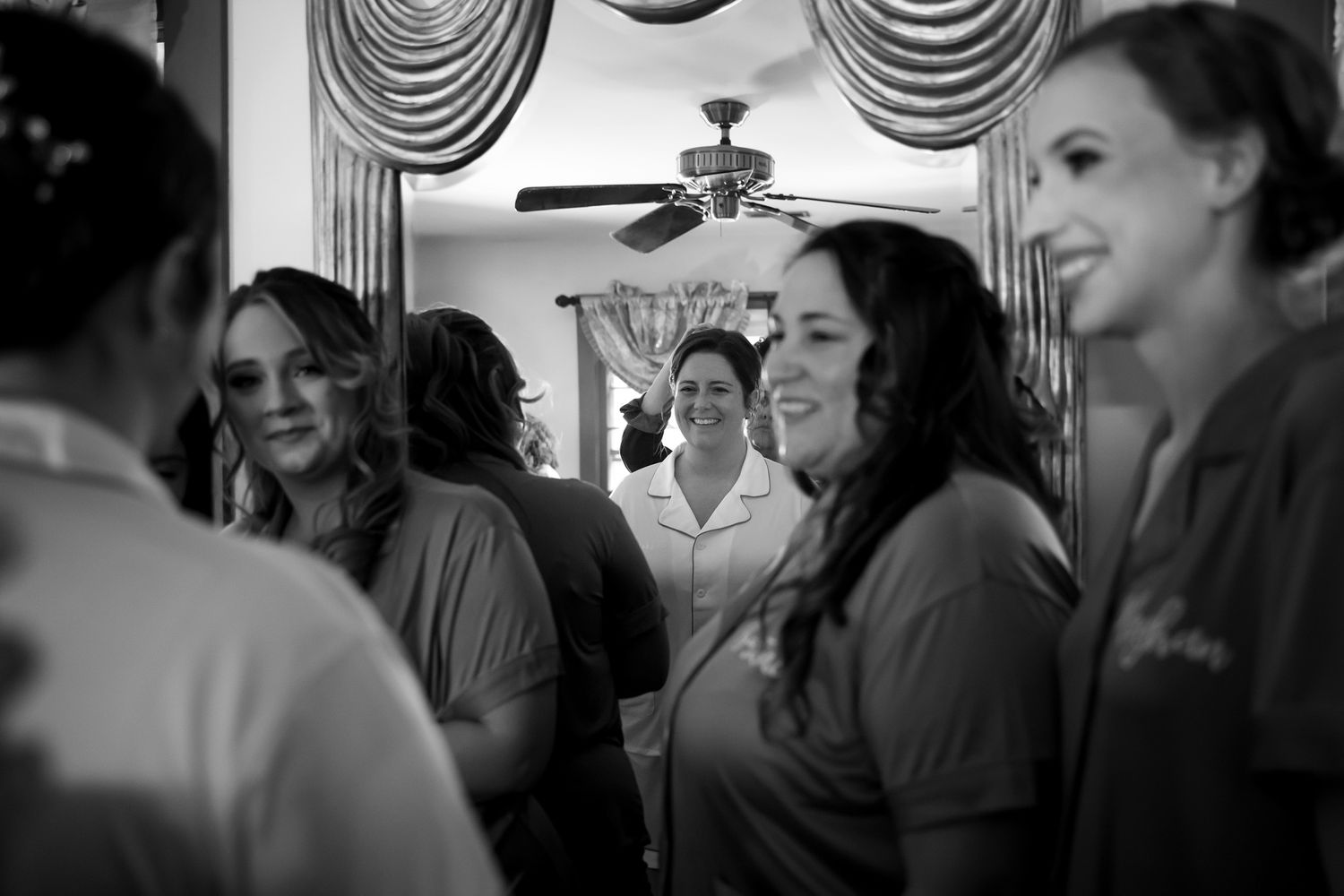
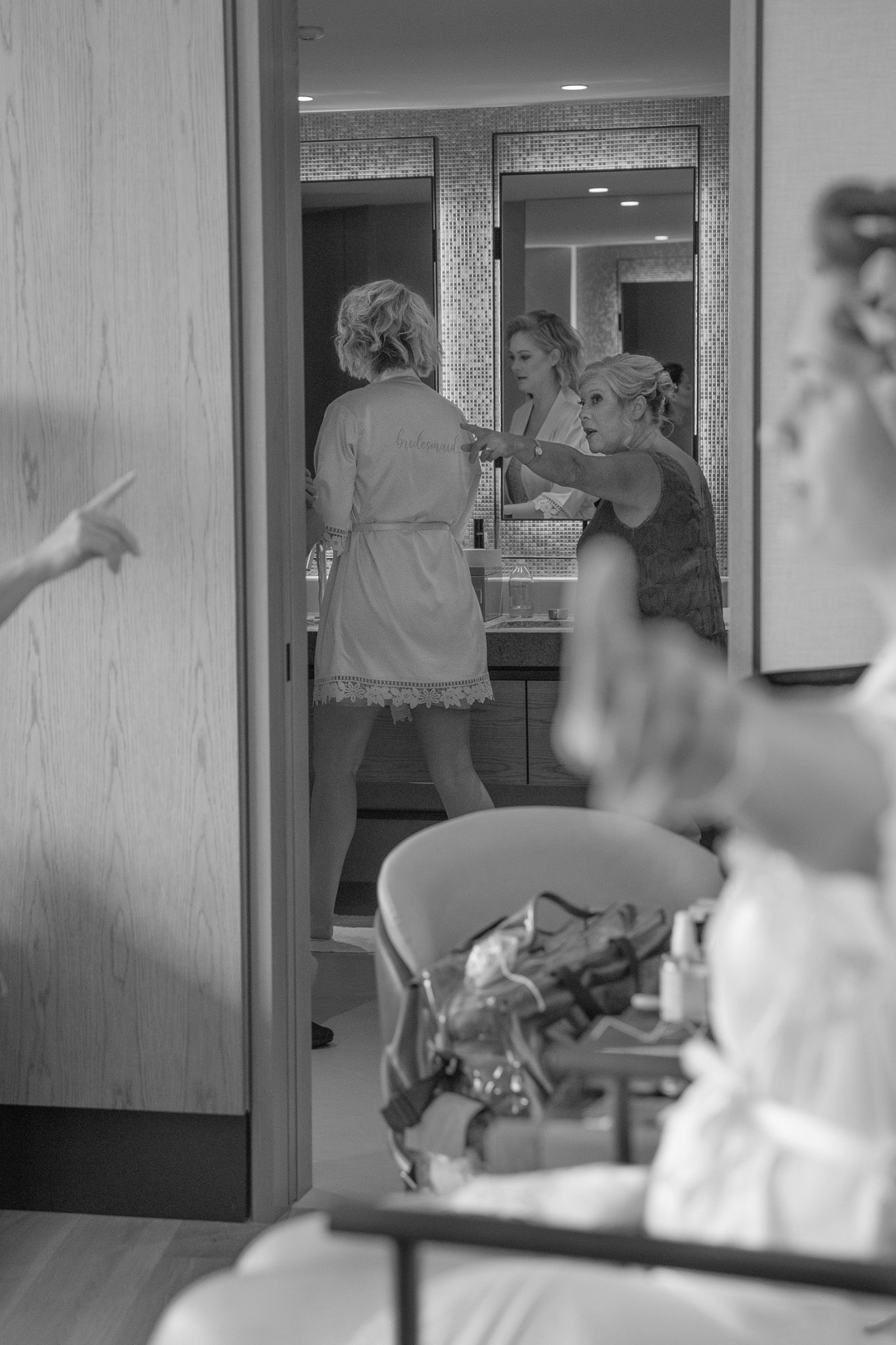
A few years ago I walked into a hotel room where the bride was getting ready for her wedding. The bridal suite was busy in the way bridal suites always are. Hair spray hung in the air. Dresses were draped over chairs. Somebody was looking for a missing shoe. Somebody else was trying to remember where the bouquets had been put. Children were hanging around bored. There were conversations happening in every corner of the room.
I stepped through the doorway carrying my camera bag and without hesitating I pulled my camera out ( a bit ninja like).
For a brief second, every woman in the room seemed to be pointing in a different direction. The gestures were completely unrelated to one another, yet somehow perfectly connected. It looked chaotic and organised at exactly the same time. It looked like anticipation.
I hadn't introduced myself, or said hello
I simply raised my camera and made the photograph.
THE REAL REASON PHOTOS EXIST
The real reason this photograph exists is because nobody stopped what they were doing when I walked into the room. That may sound like a small thing, but I don't think it is.
A stranger carrying cameras had just entered one of the most intimate parts of the wedding day. Most people would expect the room to change.
Someone glances at the camera.
Someone straightens their posture.
Someone suddenly becomes aware of themselves.
Someone starts smiling because they think that's what they're supposed to do.
But none of that happened, the room simply carried on.The conversations continued,
the pointing continued and most importantly, the excitement and anticipation was real and I simply captured it.
The room did not adjust itself for me. And because it didn't, the photograph became possible.
The longer I photograph weddings, the more convinced I become that this is the part nobody talks about. The photograph is rarely made in the instant it is taken. More often, it is made in the hour beforehand, in the conversations that built trust, and in the gentle act of entering a room without asking it to change for you.
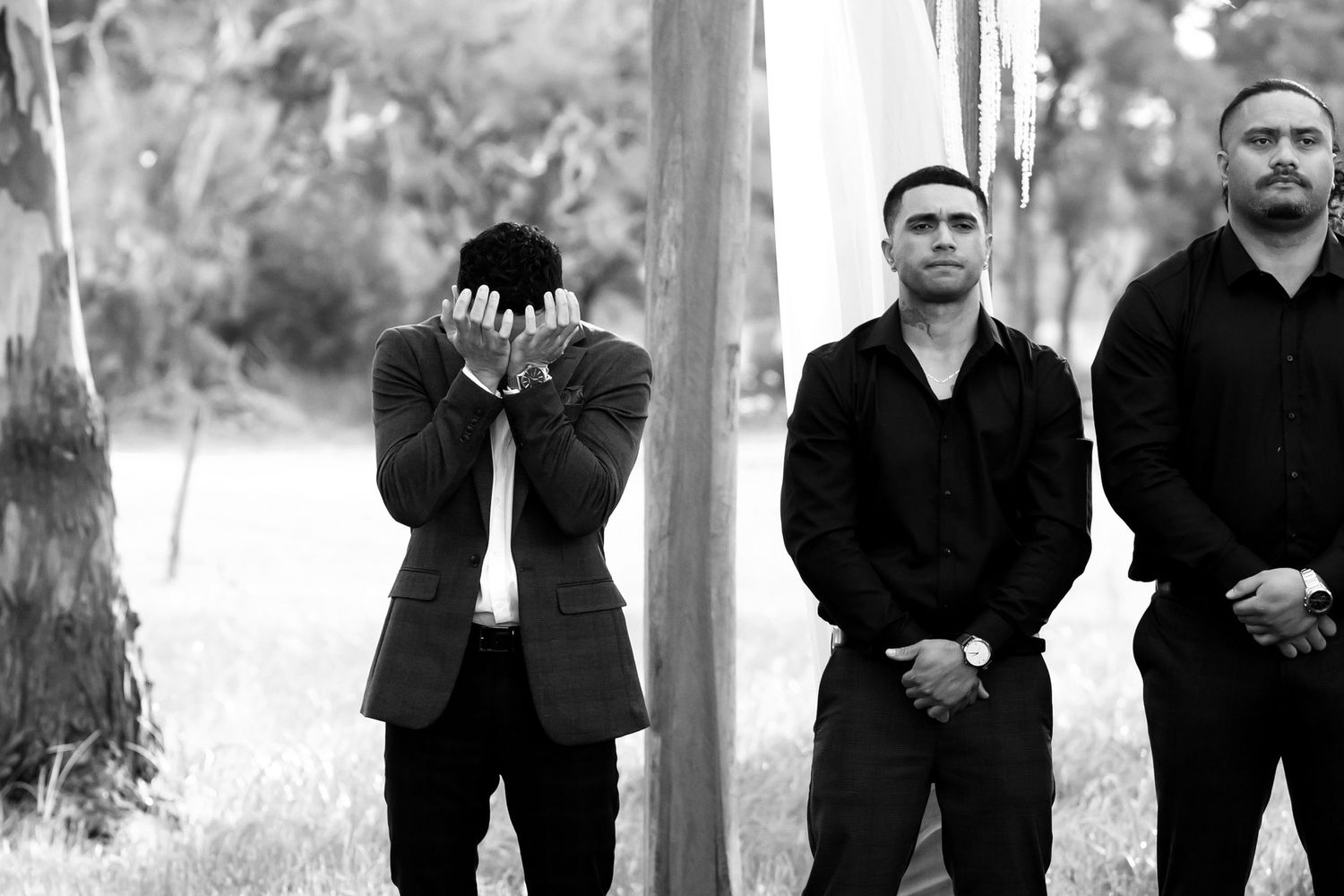
DOCUMENTARY WEDDING PHOTOGRAPHY
So here is what I think...
Working as a wedding photographer is not so much about photography, as it is about showing up without an ego, but with warmth, grace and the ability to just be me. This is hard. It is much harder than learning to use a camera. It requires you to walk into a stranger’s family on the most heightened day of their life and be fully present, not professionally present. To not put on the photographer persona. To not announce yourself with energy that asks the family to host you. To not make the room about you, even subtly, even in the way you set down your bag.
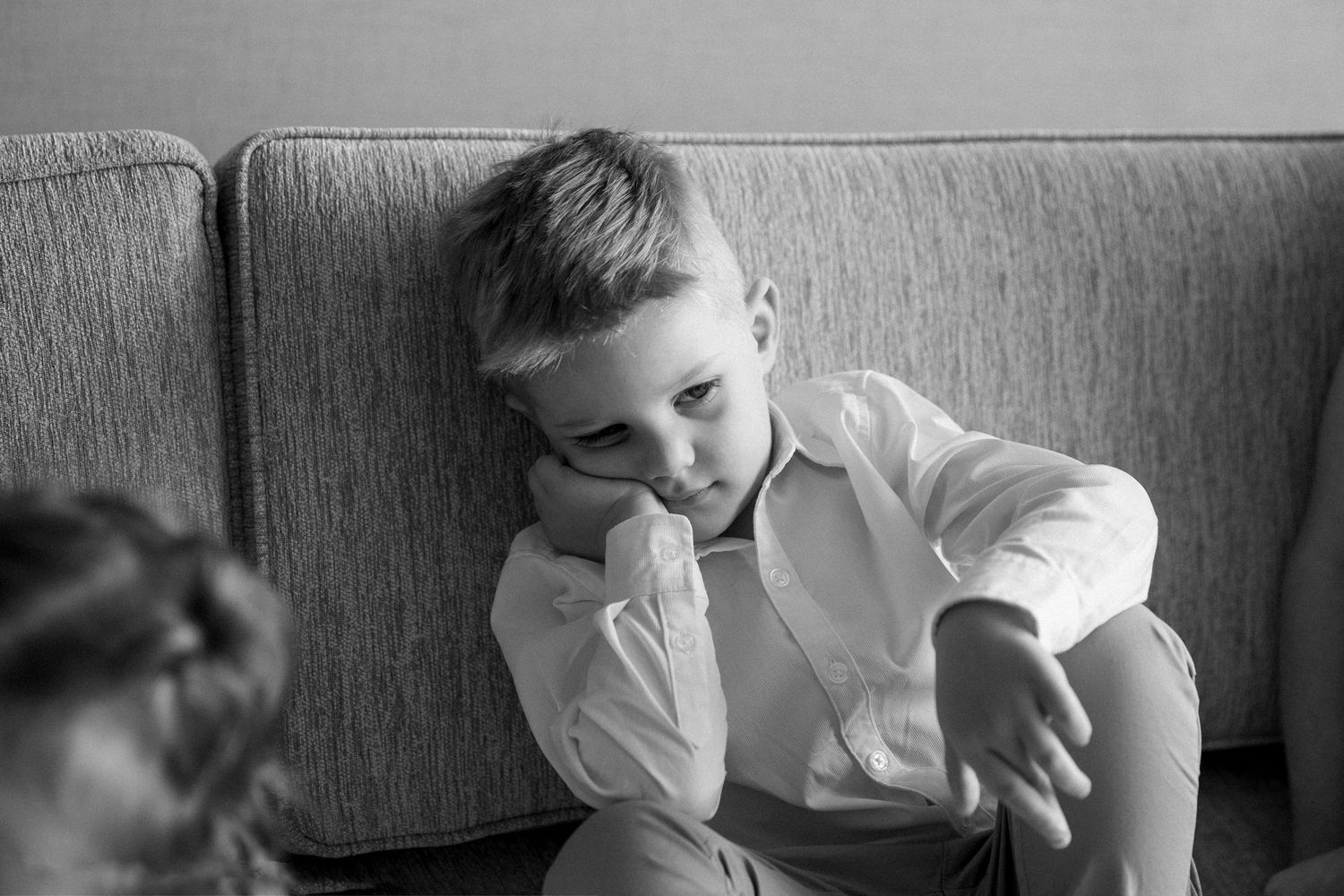
When you do this right, something shifts. The family stops watching you to decide whether they should perform. They stop holding themselves slightly differently because there is a vendor in the room. They go back to being themselves. Children stop performing, bridesmaids carry on their duties and banter without caring you are there. The photographer becomes a person the family no longer has to register.
Then the photograph is available. What I remember about THAT photograph, is the feeling of standing in that doorway and realising that the room had accepted me before I had even introduced myself.
is wedding photography becoming a pinterest board?
Part of the reason I find myself thinking about this so often is that wedding photography seems to be drifting in a different direction.
So much of what we see now is beautifully styled, beautifully lit, and meticulously curated. There is nothing inherently wrong with that. Some of it is genuinely beautiful. But I sometimes find myself wondering what gets left behind when every wedding is filtered through the same visual language.
The photographs begin to look increasingly interchangeable. The locations change. The couples change. The flowers change. Yet the images often feel as though they belong to the same wedding. The same poses. The same gestures. The same moments recreated because they worked well somewhere else.
What interests me is everything that can't be recreated.
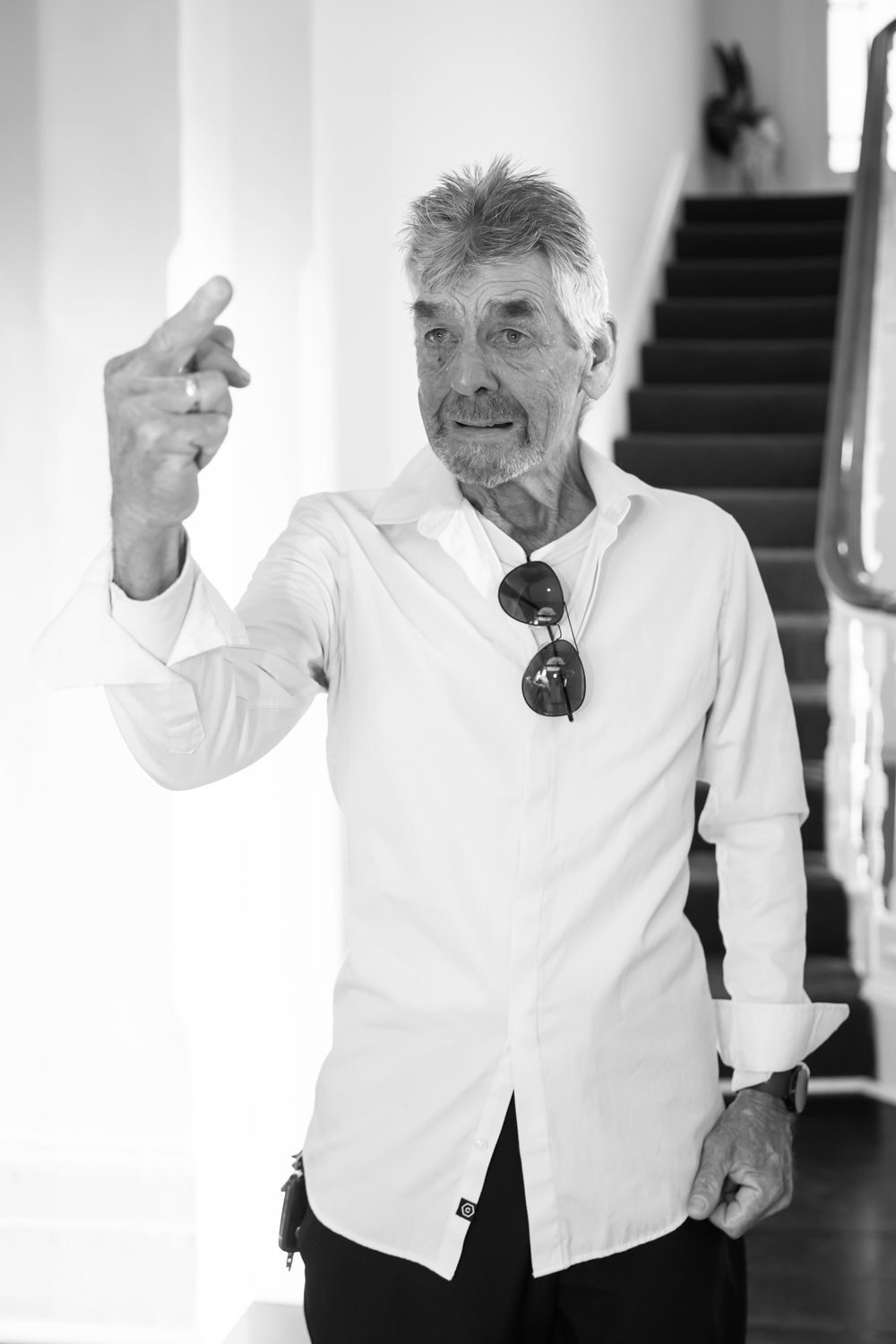
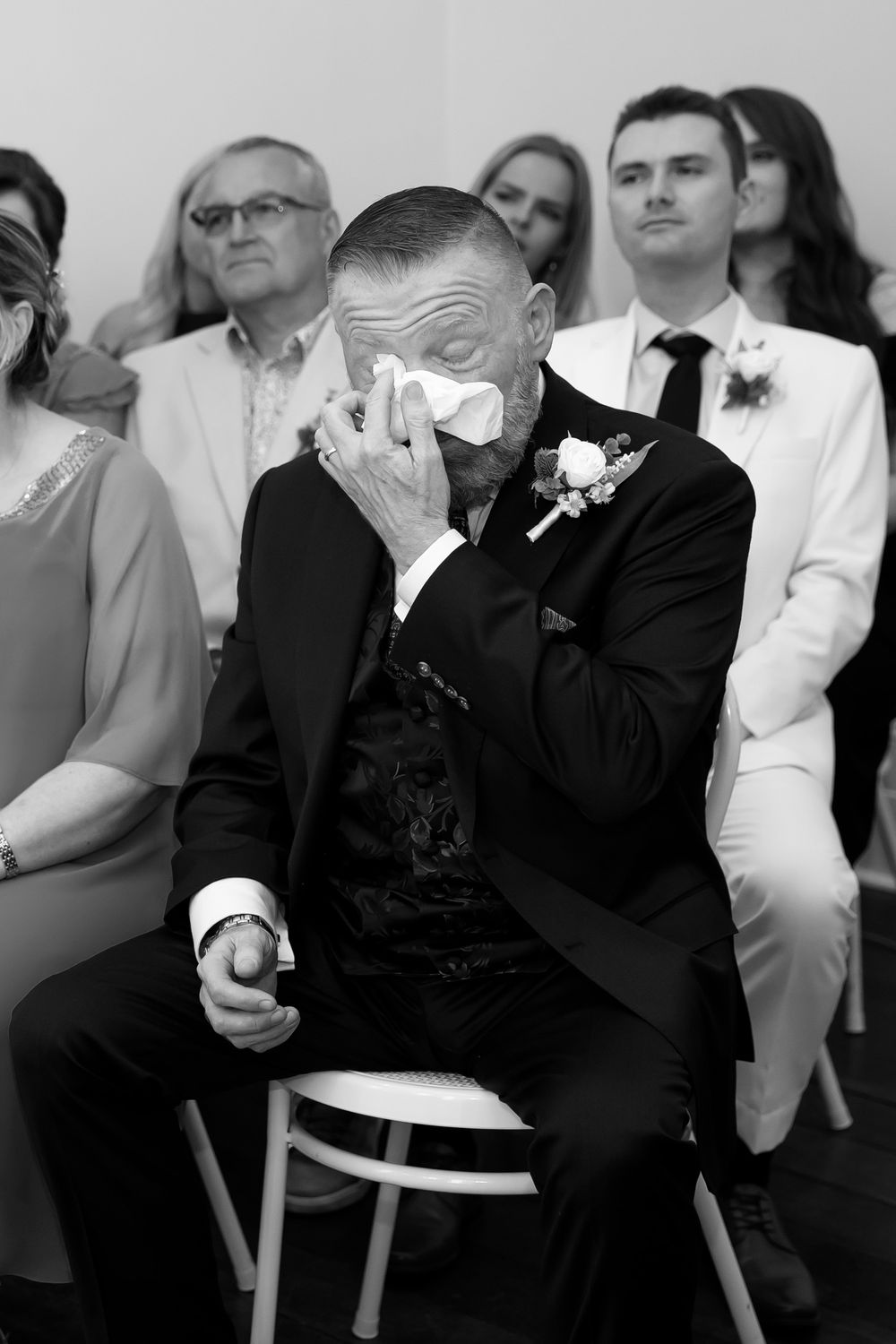
The nervous energy in a room before a ceremony. The way a father looks at his daughter when nobody else is watching. The chaos of bridesmaids all trying to solve different problems at once. The small, ordinary moments that belong only to that family and that day.
Those moments rarely make it onto a Pinterest board because they cannot be planned for. They don't fit neatly into a visual formula. They exist for a few seconds and then disappear.
And yet, I increasingly suspect they are the moments people will care most about years from now.I do know some of my most treasured wedding photos are the ones of me and my grandma just sitting quietly on a bench as she gave me some words of wisdom to carry into life.
I keep coming back to the same question whenever I look at wedding photography. Not where is the style, or where is the luxury, or where is the trend. BUT, Where is the marriage?Where are the emotions and the story?
Where are the relationships that existed before the wedding and will continue long after it is over?
Where are the people who made these two individuals who they are?
Because those things feel like the heart of the story to me. And if they disappear from the photographs, I sometimes wonder what story we are left telling.
I am not against staging
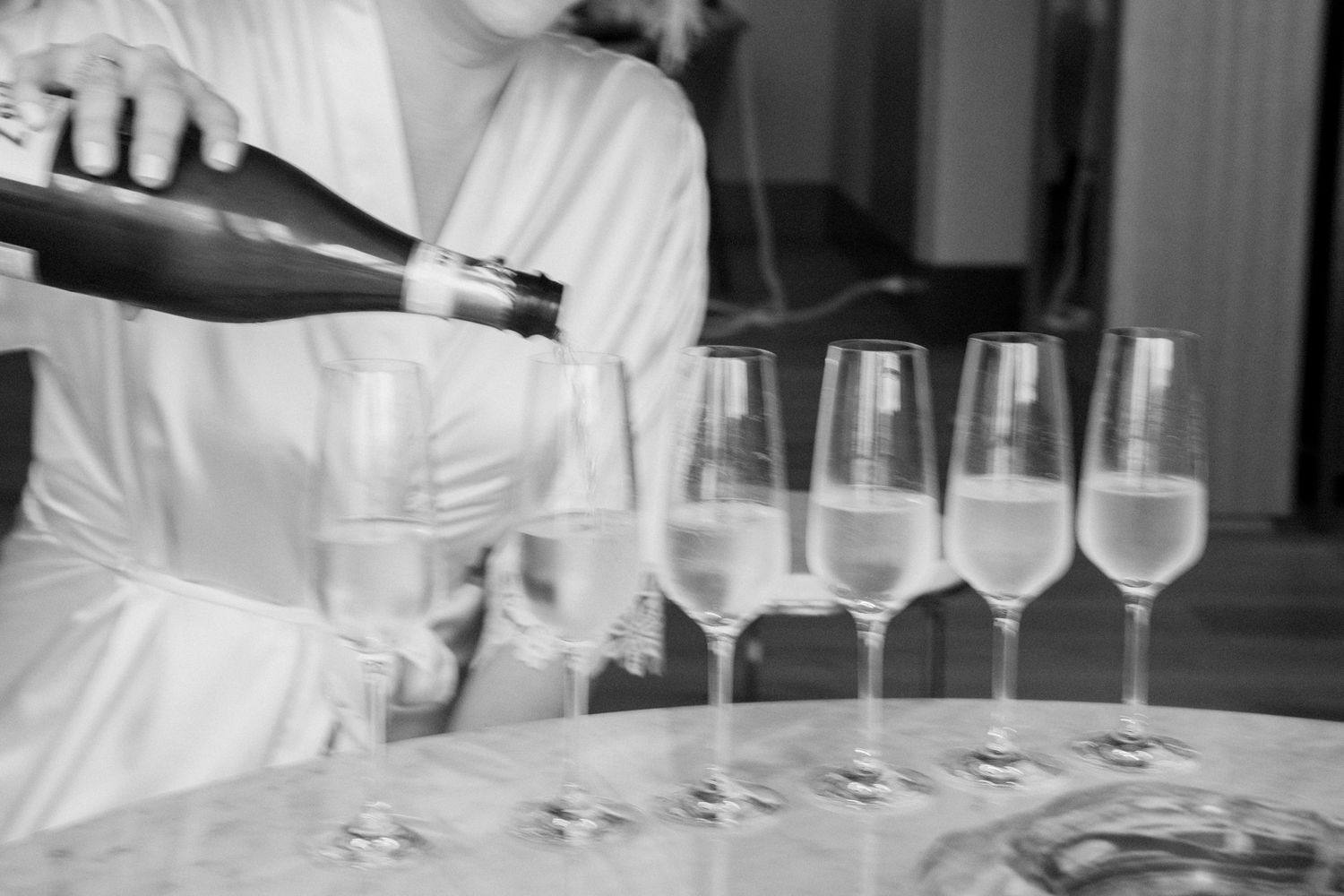
I am not against staging, don't get me wrong. I adore using light and beautiful scenes. Some of the most important photographs on a wedding day are intentionally created. Family portraits matter. Couple portraits matter. Most people need a little direction to feel comfortable in front of the camera, and there is real skill in helping someone look and feel their best. I do those things effortlessly at every wedding, and I believe they have an important place.
But I have always felt that if the wedding day is reduced only to the staged moments, something important gets lost.
One of the reasons I care so deeply about getting-ready photographs is that they exist before anyone is performing. Before the ceremony begins. Before the timeline takes over. Before the couple become the centre of attention. The getting-ready room is often where the most honest moments of the day happen. A mother seeing her daughter in her dress for the first time. A bridesmaid quietly fixing a button. Nervous laughter. Last-minute chaos. The anticipation that hangs in the air before everything changes.
These moments cannot be recreated later because they only happen once. They belong to that family, on that day, in that particular room.
When I look back through weddings years later, it is often these photographs that stay with me. Not because they are perfect, but because they are true. They remind me that weddings are not simply events being photographed. They are families living through a moment that will never happen again.
The portraits are important. The details are important. The carefully arranged photographs have their place. But the heartbeat of a wedding often lives in the spaces between them, in the moments nobody planned for and nobody thought to ask for. Those are the photographs that tell us not just what the wedding looked like, but what it felt like to be there.
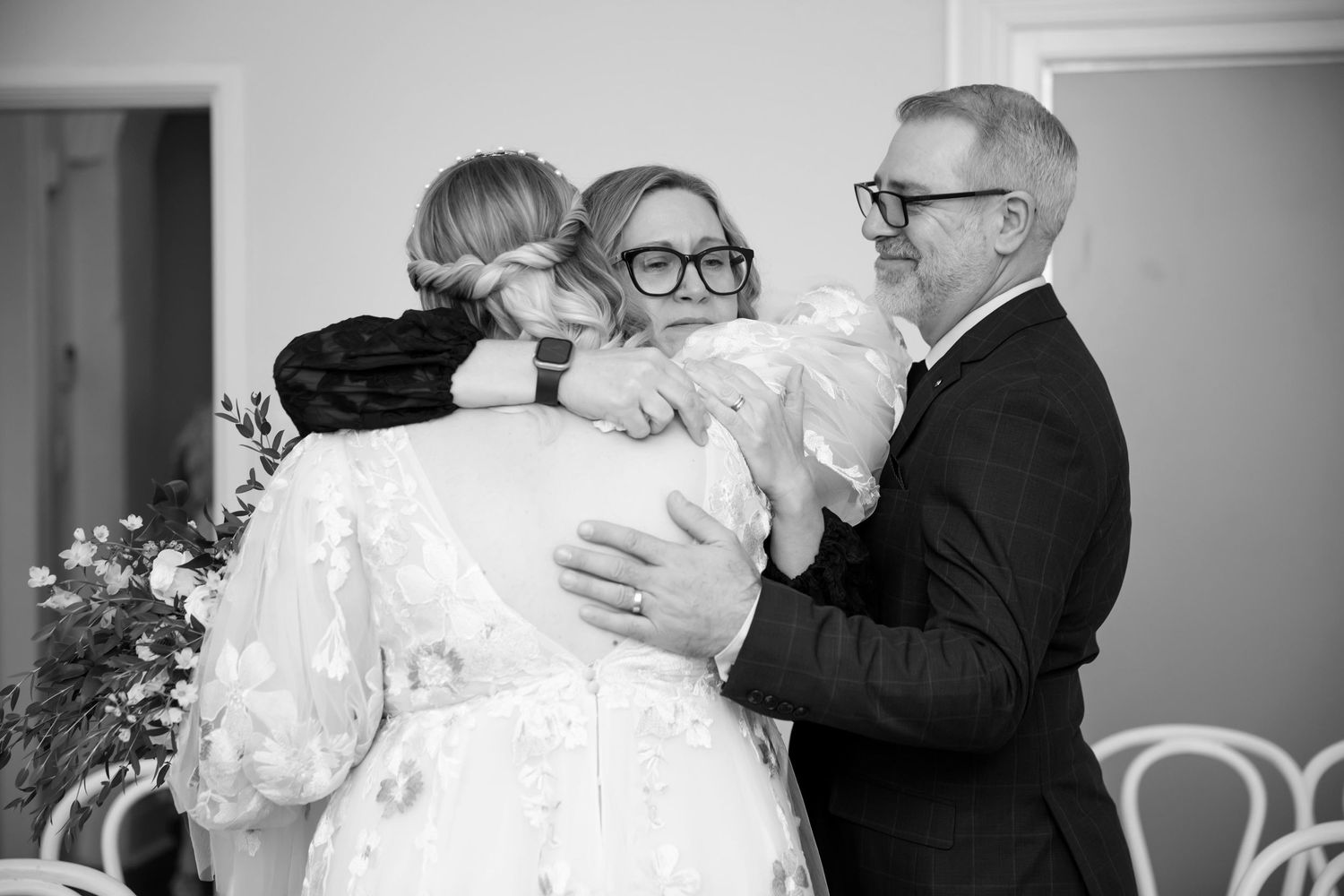
Why do I care so much?
The reason I care about this so much has very little to do with aesthetics. It isn't about whether one style of photography is better than another, or whether my taste differs from someone else's. It comes down to a much simpler question: what are photographs actually for?
I think photographs exist to help us remember. Not just what people looked like, but who they were. The way they laughed when they forgot anyone was watching. The way they fussed over a dress, pointed across a room, hugged a family member, or sat quietly for a moment before the day began. The small things that seem ordinary at the time and become priceless later.
Because time has a habit of turning ordinary moments into important ones.
The bridesmaids in that photograph won't always be the same age. The parents won't always be there. The room itself may no longer exist. One day, that photograph may be one of the few remaining records of how that morning actually felt. Not a recreation of it. Not an interpretation of it. The thing itself.
That is why I find myself drawn to these moments. Not because they are fashionable or likely to perform well online, but because they are real. Years from now, nobody will care what camera was used or whether the image reflected a particular trend. What they will care about is that they recognise themselves in it. That it brings them back to a moment they had forgotten. That it reminds them of someone they loved.
At its best, I think wedding photography is an act of paying attention. The job is not simply to take photographs, but to enter a family's world gently enough that they can continue being themselves. To earn the room. To become someone they do not feel the need to perform around. And then, when those small, ordinary, unrepeatable moments inevitably appear, to be ready enough to notice them.
As such I will keep showing up as me first and a photographer second.